
-
A Sense of Scent: Floris x Classic Art London Art Trail
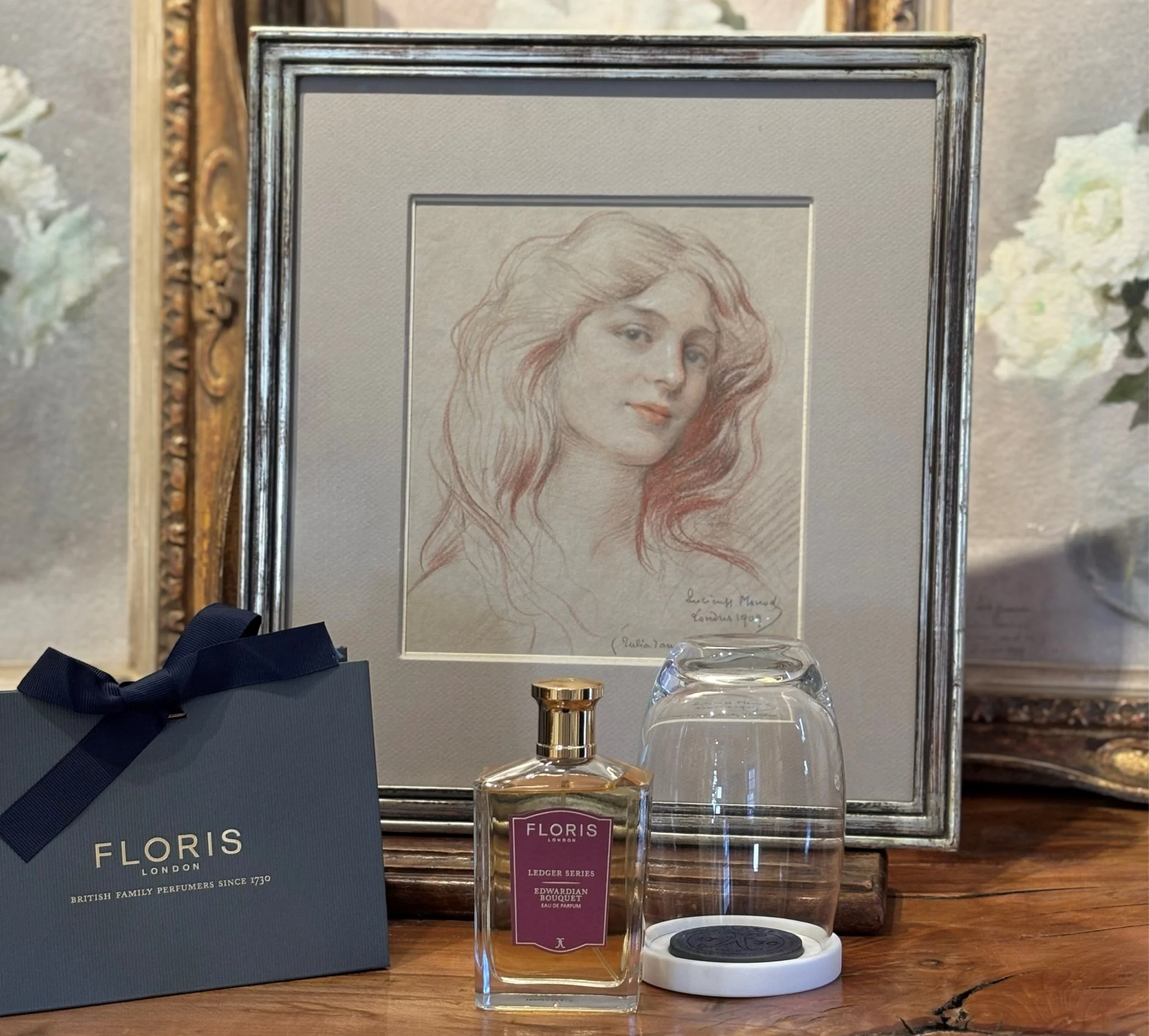
Take our multi-sensory scented art trail devised in collaboration with Floris London. It pairs ten works at Classic Art London exhibitions that evoke or embody a Floris fragrance. Chosen by the Floris perfumers, each picture is redolent of an ingredient or the inspiration behind a scent.
Follow the trail and engage your senses! Pick up a leaflet and Classic Art London map from Floris (Jermyn Street) or at the dealers below, and discover the fragrances represented in artworks at these galleries.
Charles Beddington Ltd | Floris Neroli Voyage
The Limner Company | Floris Night Scented Jasmine
David Messum Fine Art | Floris Edwardian Bouquet &
Colnaghi | Floris Oud & Cashmere room fragrance & Floris Celest (their newest launch)
Fine Art Commissions | Floris Elite
From Thursday 25 June:
Karen Taylor Fine Art | Floris Bouquet de la Reine, Floris Cherry Blossom & Floris Bergamotto di Positano -

The Piece I'd Never Part With
We are thrilled to have our second Country Life panel talk taking place at the Society of Antiquaries on Tuesday, 30th June at 5.30pm.
Last year, Patrick Monahan, regular contributor to Country Life and a New York-based art adviser, moderated the first event of its kind in the UK - it brings a twist to one of the magazine's most beloved sections: The Piece I'd Never Part With.
This year he is joined by not just one but four well-known art & antiques specialists who are regulars on our Sunday night TV screens.
Geoffrey Munn, Lennox Cato, Rupert Maas and Matthew Haley are all gearing up for a lively discussion.
What is the one work of art they own, they would not want to part with? Are there works that got away and they now really regret not having taken out a loan for?
And if money were no object, what do you think they would buy? Would Geoffrey buy a Faberge egg or does he secretly collect works on paper?
Patrick will use all his charm to find out all their collecting secrets.
Media partner Country Life magazine is supporting this entertaining evening and proceeds from ticket sales for this talk go directly to the Society’s 'Past Matters’ appeal, which will ensure that one of the UK’s oldest learned societies can stay at Burlington House and look after its vast and diverse collection for the next 998 years.
£20 will ensure that you can spend an enjoyable hour in the historic (and air-conditioned) surroundings of the Society of Antiquaries and chat to the participants afterwards over a drink.
Tickets can be purchasedhere.
For more information, please check out or talks page.
-
One People, Two Shores: Anglo-American Art in the Age of Revolution
“Our geniuses all go to Europe. In England, at present, the best history painter, West; the best portrait painter, Copley; and the best landscape painter, Taylor, at Bath, are all Americans.”
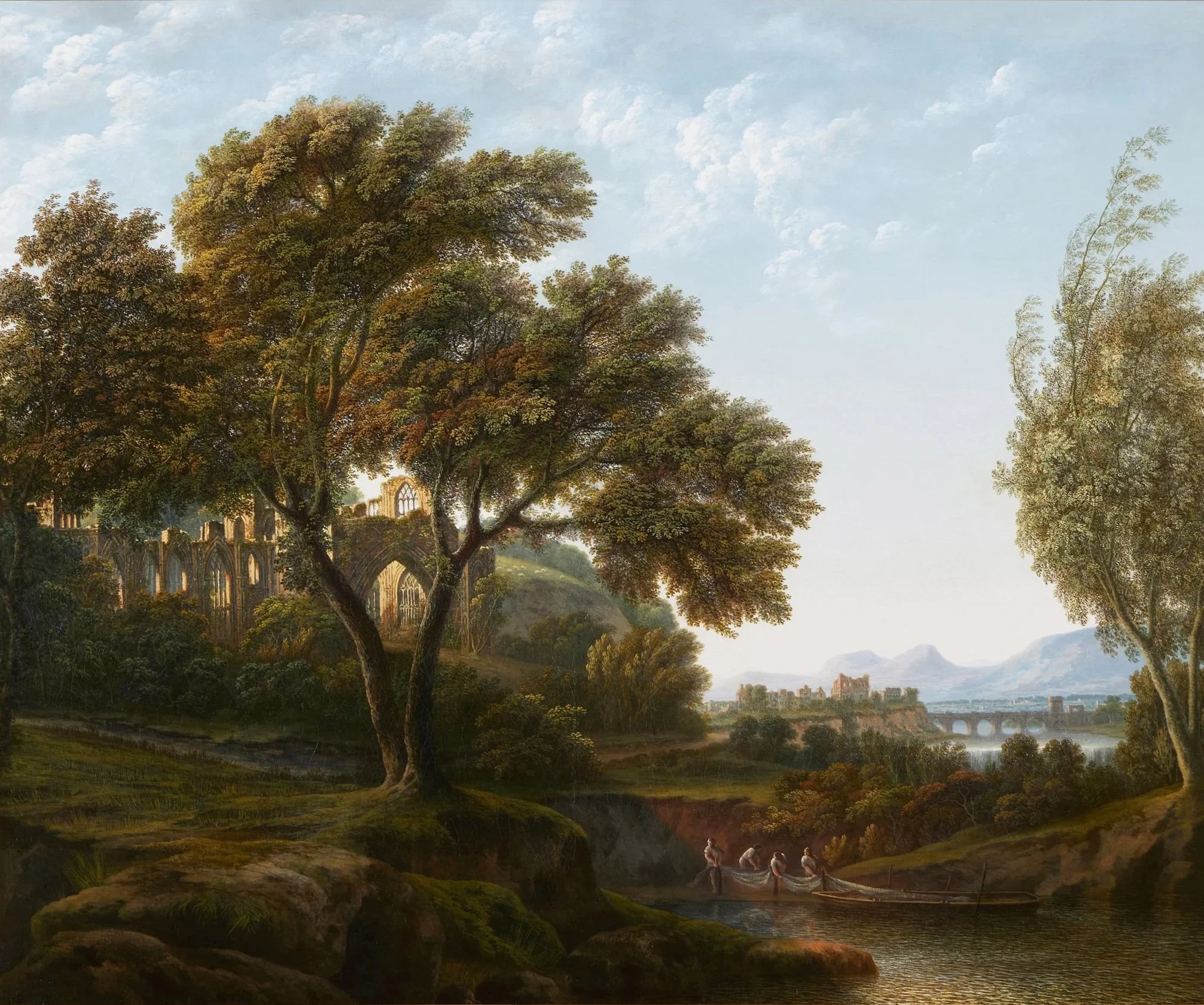
Benjamin Franklin, 16 May 1783Marking the 250th anniversary of the Declaration of Independence, Ben Elwes Fine Art takes a visually rich and historically significant look at the Anglo-American artists who enriched London in the eighteenth century. One People, Two Shores: Anglo-American Art in the Age of Revolution brings together works on canvas and paper by Benjamin West (1738-1820), John Singleton Copley (1738-1815), and John Taylor (1735-1806), three artists singled out by Benjamin Franklin as the best in England in their respective genres: history, portraiture, and landscape.
Amongst the additional works which complement the exhibition are an eighteenth-century portrait by the leading artist of New Orleans, Jose Francisco de Salazar y Mendosa (1750-1802), Robert Smirke’s study for an engraving that appeared in Joel Barlow’s epic poem, The Columbiad, and the terracotta maquette by Frédéric-Auguste Bartholdi (1834-1904) for Liberty Enlightening the World.
OPENING TIMES
Monday 22 June to Friday 13 September 2026
Monday to Friday, 9:30am to 5:30pm, or by appointment
Classic Art London, Monday 22 June to Friday 3 July 2026
Monday to Sunday, 9:30am to 5:30pm, or by appointmentImage: John Taylor (Philadelphia, 1735-Bath, 1806), River Landscape with Ruins of an Abbey, 1792 (122.6 x 147.3 cm). Ben Elwes Fine Art, London.
-

Sunday Telegraph: Five previously unknown Constables will be on view for first time during CAL
Alexander Clayton-Payne will be showing five previously unknown John Constable artworks. World-renowned authority on Constable, Anne Lyles has told The Telegraph: “They’re absolutely classic Constable. There is no doubt that they’re right.”
You can read the full article by Dalya Alberge online here.
In the year that marks the 250th anniversary of John Constable’s birth, the rediscovery of five previously unrecorded drawings, centred on the years 1814 to 1816, returns us to the landscape around East Bergholt and to the years in which his art, his love for Maria Bicknell and his attachment to the place of his childhood became inseparable. Acquired last year at auction in Germany, and previously unknown to Constable scholarship, the drawings are exhibited here for the first time.
The significance of the group lies not only in its addition to Constable’s known work as a draughtsman, but in its closeness to the landscape from which his art drew its deepest nourishment. East Bergholt, the fields behind his father’s house, the parish church, the working life of the land and the river world of the Stour were the places in which all that he knew most intimately became the enduring substance of his art.
The attribution has been kindly confirmed by Anne Lyles, the leading Constable scholar and former curator at Tate. The drawings include studies of East Bergholt, rural figures and the working landscape that Constable knew from childhood. They offer a rare and intimate glimpse of the artist’s eye at work during the years immediately before his marriage to Maria Bicknell in 1816, and will be shown together for the first time in Alexander Clayton-Payne’s exhibition at 6 Ryder Street as part of Classic Art London. The exhibition will be open from 26th June to 3rd July 2026, but a talk celebrating Constable at 250 will be held on the 25th June with Anne Lyles, Susan Owens and Emma Roodhouse, moderated by the editor of The Burlington Magazine, Christopher Baker. -
The Artist & the Engineer: until 14 June
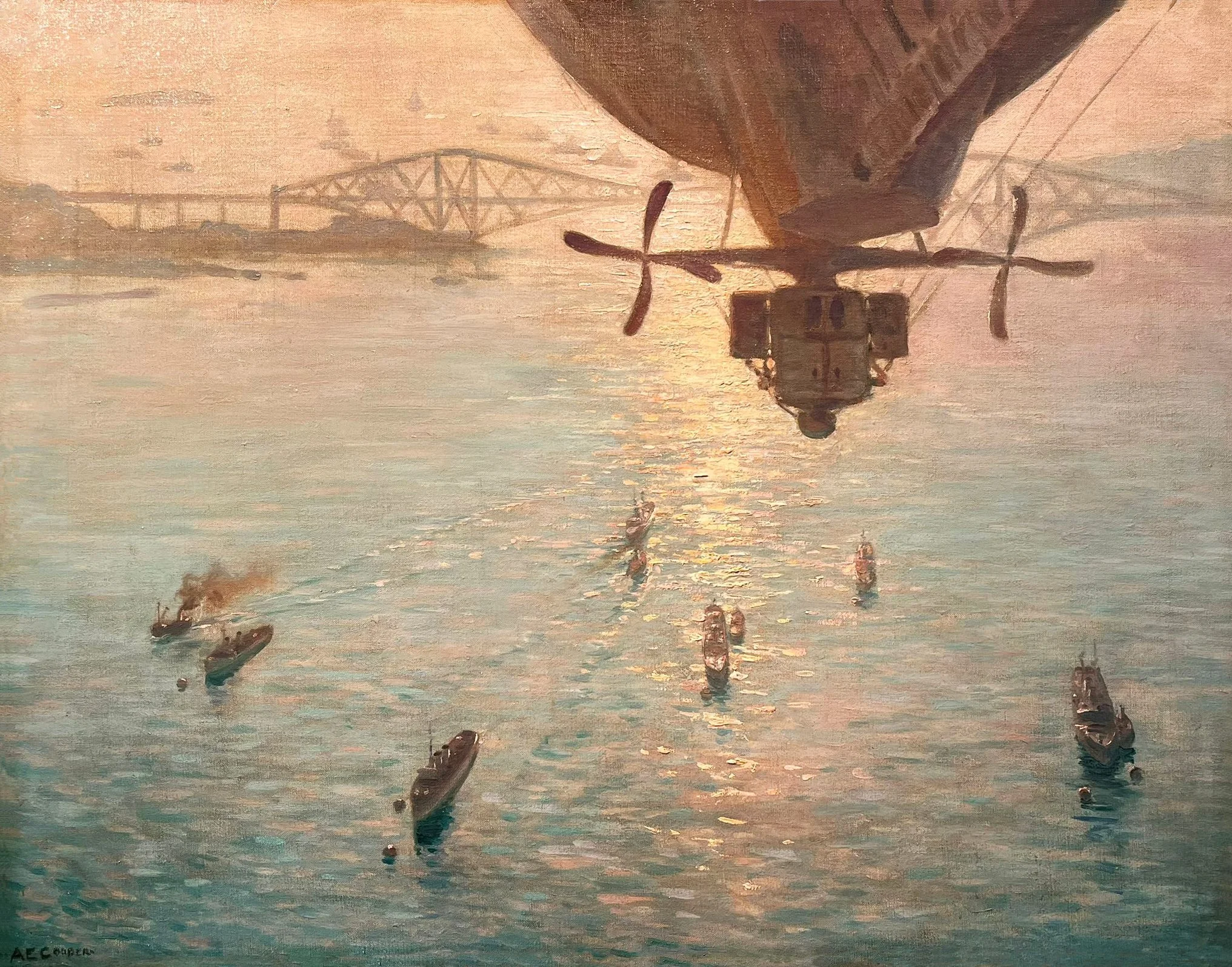
Open now at Darnley Fine Art in Cecil Court is an unique exhibition celebrating the lifelong friendship between two talented men with a shared passion for aviation: artist Alfred Egerton Cooper and engineer Sir Barnes Wallis. Cooper was a renowned portraitist and an Official War Artist to the RAF, famed for his depictions of air force personnel. Barnes Wallis is a key figure in British history; he was at the forefront of British airship design during the First and Second World Wars, and, as the inventor of the innovative bouncing bomb, he undoubtedly contributed in no small part to the Allied victory in WWII. This was immortalised in the iconic 1955 film The Dam Busters in which two of the works in the exhibition feature, hanging on the wall of Wallis’ office.
This exhibition puts Cooper’s stunning depictions of Wallis’ airships at its heart, providing a rare opportunity to view these works together. The exceptional and distinguished careers of both men are highlighted, with the display charting their meeting in the Artists Rifles during the First World War, a bond that would last through the inter-war period and beyond.
This is the final opportunity to view these works of national importance, which beautifully illustrate the intertwining of Cooper and Barnes Wallis’ fascination with aviation, before they go abroad to private collections.
Darnley Fine Art, 2-4 Cecil Court, London WC2N 4HE
Historic Cecil Court, a pedestrianised destination for art, antiques, books, culture, and curiosities, is a stone’s throw from The National Gallery and National Portrait Gallery and nestled between Covent Garden and Leicester Square. It is also home to some of London’s last working Victorian gas lamps.
-
Beeswing - She’s A Winner!
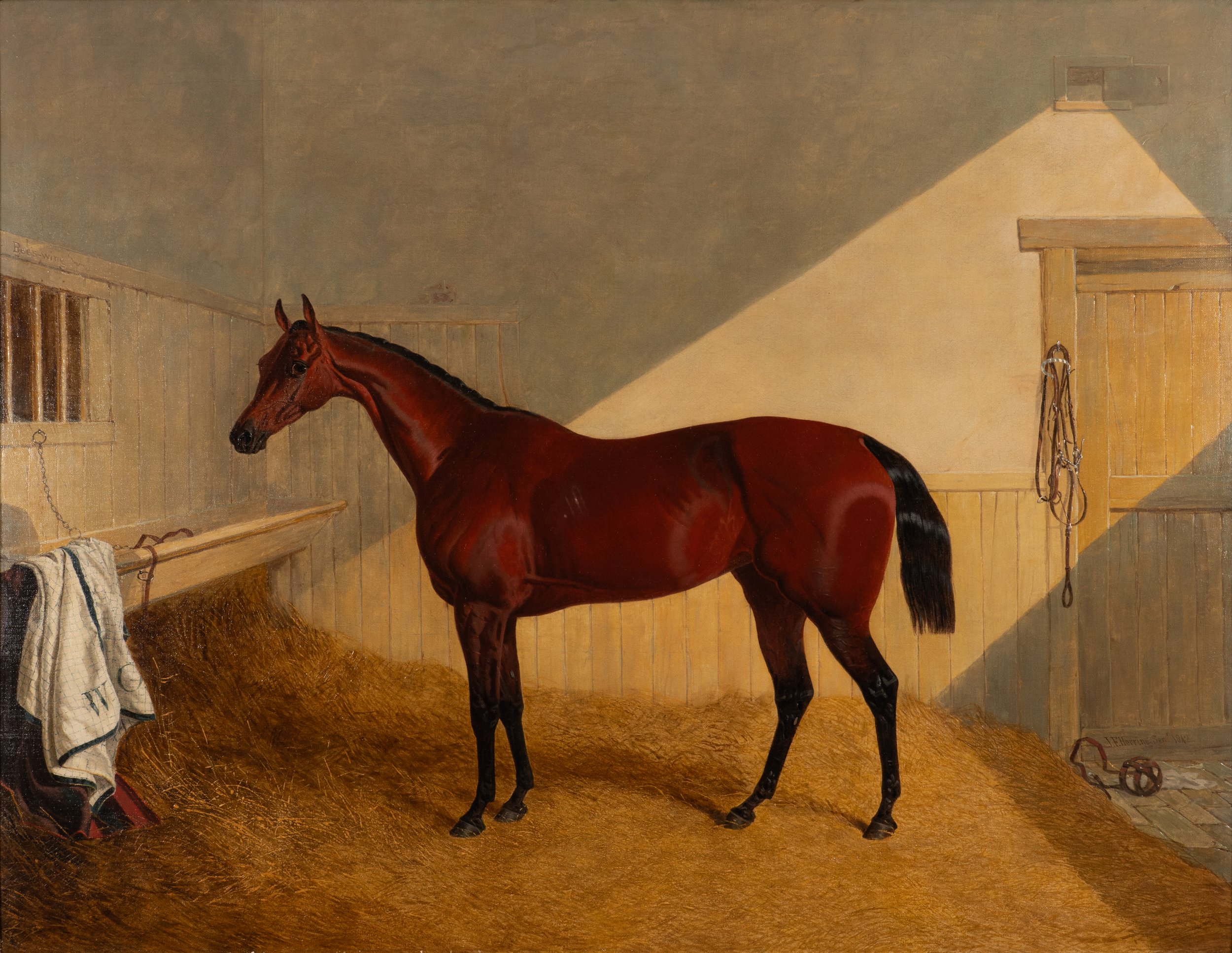
John Frederick Herring Snr. (1795-1865) is regarded as one of the finest equine and animal artists of the nineteenth century. An important recorder of sporting and rural life, he began his career as a coach painter and driver in Doncaster, allowing him to closely observe the anatomy of horses and develop his natural ability to paint them.
Here he captures ‘Mr William Orde's bay filly, Beeswing, by Dr Syntax‘, foaled in 1833, who went on to become one of the most celebrated racehorses of the nineteenth century. The mare accumulated 51 wins in 63 starts over eight racing seasons - a feat virtually unmatched in British racing history. At age nine, when this work was painted in 1842, she achieved her crowning triumph, winning the Ascot Gold Cup in thrilling fashion. Through her line, Beeswing’s influence is still visible in modern pedigrees.
With Royal Ascot taking place from 16 to 20 June, this work is worth seeking out at Rountree Tryon where it will form part of their joint exhibition (22 June – 3 July 2026) with Fine Art Commissions, ‘Lasting Impressions from the eighteenth century to the present day’, where they reveal a modern approach to collecting for today’s country house.
Rountree Tryon, 19 Ryder Street, St. James’s, London SW1Y 6PX
Fineartcommissions.com
-
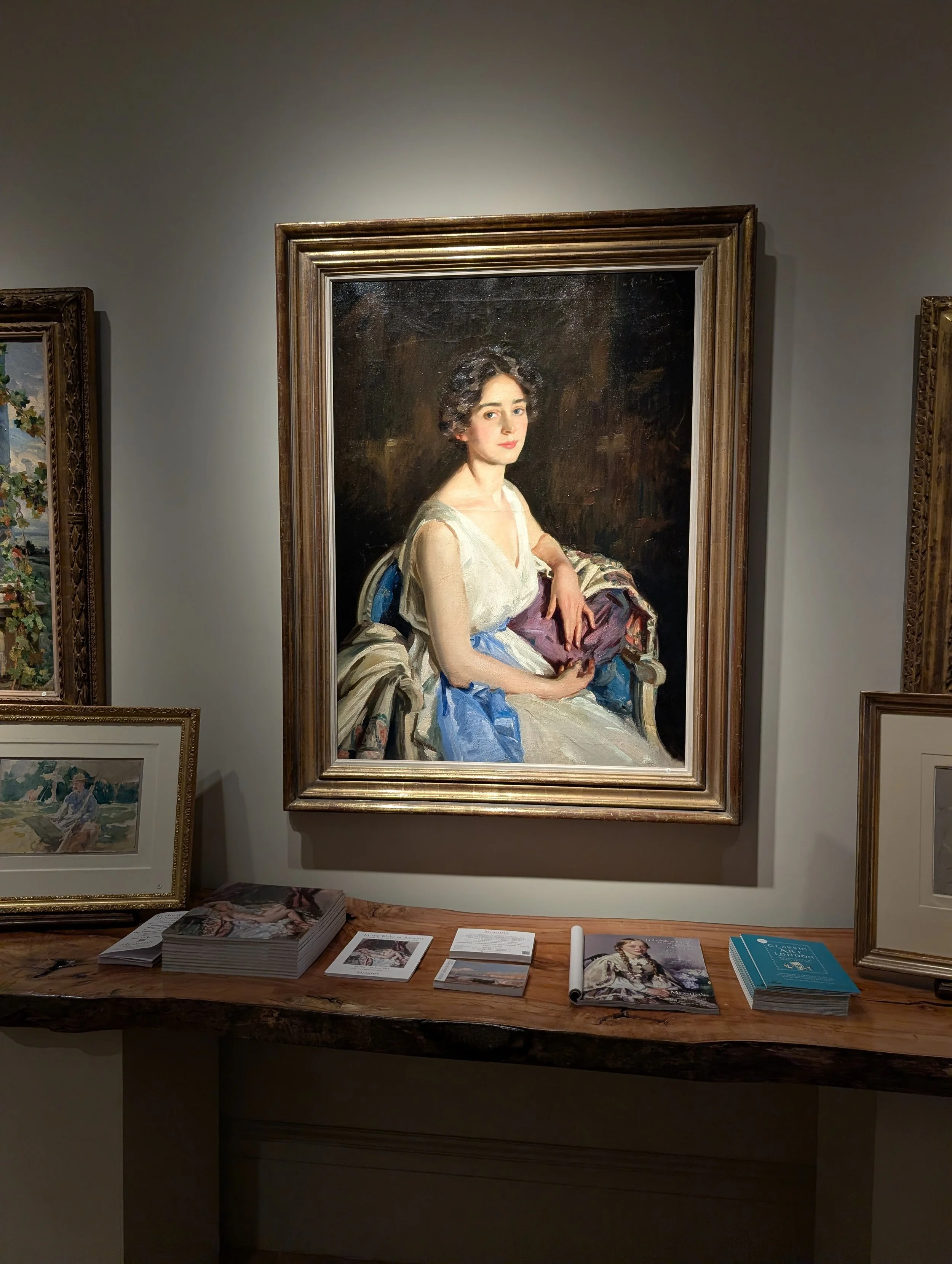
In the Wake of Sargent: the de Glehn and Monod painting circle
A major exhibition now open at David Messum Fine Art looks at the working life of a trio of artistic friends: Wilfrid Gabriel de Glehn RA NEAC (1870–1951), his wife, American painter Jane Emmett de Glehn (1873-1961), and his cousin, Lucien Hector Monod (1867-1957). Between them they developed a distinct strand of sensitive twentieth-century Impressionism that owed a debt to their good friend, John Singer Sargent.
After Sargent’s death in 1925, the de Glehn-Monod circle continued a way of working that had first been refined in Sargent’s company. What endured was not only the memory of shared journeys, but a preference for certain kinds of settings: spaces neither wholly interior nor wholly open, in which work could emerge out of daily life without seeming to interrupt it. Together, they carried forward not simply the memory of a master, but a way of inhabiting the world through art. And so what survives is not only influence, but atmosphere.
This exhibition traces their network – of people and places - through portraits, landscapes, figure studies and still lifes, including a body of now rare works by Jane de Glehn.
Although the full exhibition closes 27 June, many works will continue to be on show within the gallery.
David Messum Fine Art, 12 Bury Street, London SW1Y 6ABiption goes here
-
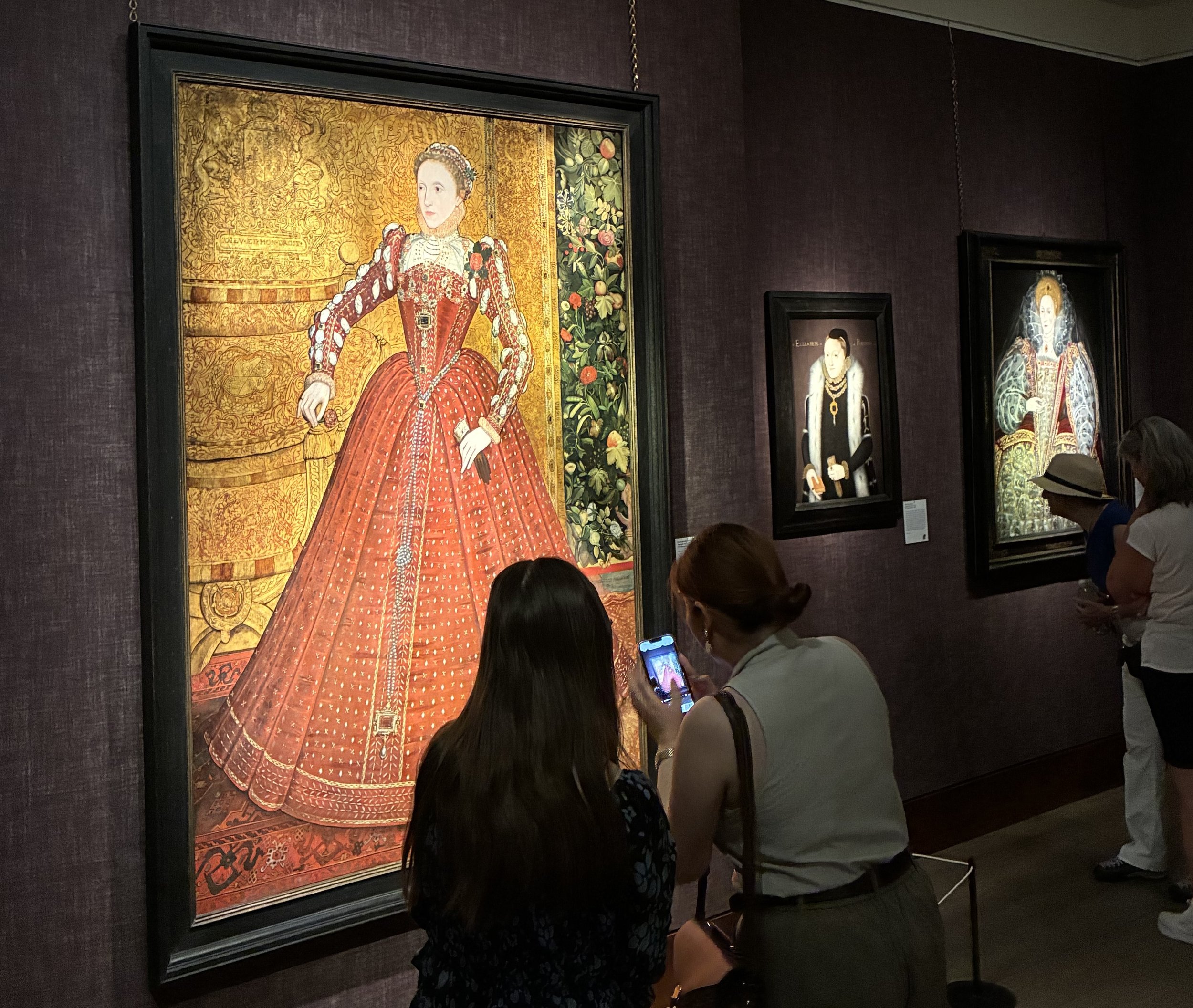
Glorious Gloriana
Don’t miss Elizabeth I: Queen and Court, an exhibition at Philip Mould & Company of truly outstanding Tudor works, which runs until Friday 10 July. It includes the earliest surviving life-size, full-length portraits painted during Queen Elizabeth I's lifetime, alongside some of the key figures of her reign and close circle of courtiers and confidantes.
Drawn from private collections, this fascinating display features never-before-seen and rarely shown paintings and explores how portraiture functioned as a tool of power and was used to project authority, secure allegiance, and, in rare cases, register dissent.
This highly-acclaimed show - The Times describes it as “unmissable” - is a rare chance to see four portraits of Elizabeth I (1533-1603), which trace her transformation from eligible young Tudor princess to the mystic, Virgin Queen of her later years. Seen together, they reveal the sustained and strategic management of her image across a reign shaped by religious tension and political uncertainty.
Philip Mould & Co, 18-19 Pall Mall, London SW1Y 5LU
On Thursday 25 June, Classic Art London presents a talk on Tudor Portraits, moderated by Alexandra Ault, Society of Antiquaries, with Charoltte Bolland, National Portrait Gallery, Edward Town, Yale Centre for British Art and Lawrence Hendra, Philip Mould & Co.
-
WE’RE OFF TO TEFAF MAASTRICHT 2026
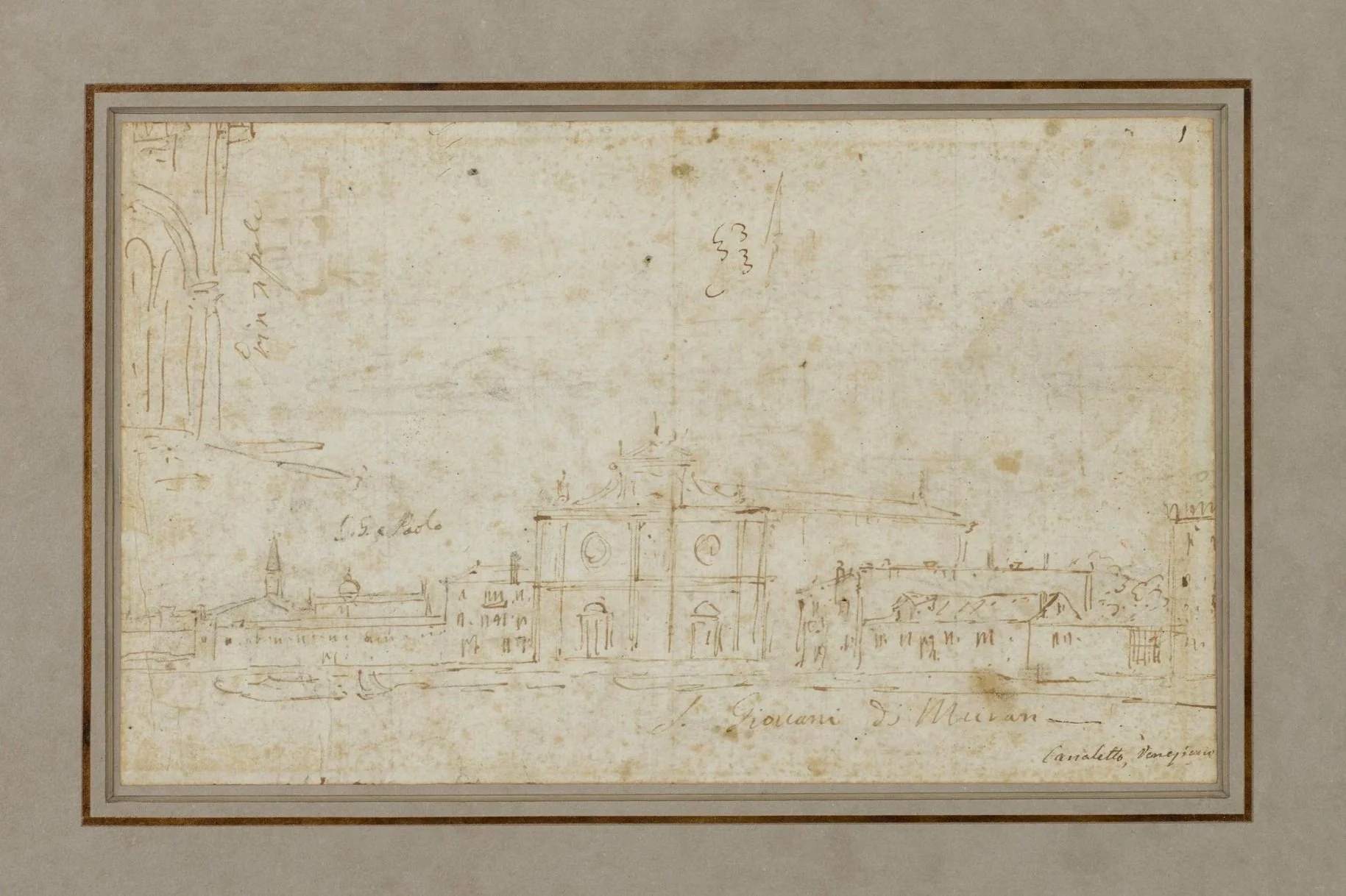
With many classic art dealers continuing to revitalise the reputation of historic female artists, there is a fine work by Lavinia Fontana to be found at Colnaghi. A highlight at Trinity Fine Art is The Penitent St. Jerome by Orazio Gentileschi, whilst at Colnaghi is a recently identified Portrait of a Carmelite Monk by Alonso Cano, which materially expands the surviving corpus of his portraiture. At Charles Beddington Ltd discover a drawing by Canaletto, The Church of San Giovanni dei Battuti, Murano, with Venice, the Campanile of San Marco and the Church of SS. Giovanni e Paolo, in the Distance. Clearly a leaf from a sketchbook, presumably made on the spot with the help of a camera obscura, this was used for the closely corresponding painting, an important early work of c. 1724/25 in the State Hermitage Museum, Saint Petersburg, which is surprisingly Canaletto’s only painting of Murano.
We will be at the Fair on Thursday 12 and Friday 13 March, mostly to be found somewhere between these three stands (all quite close together) or email Silke info@classicartlondon.uk if you want to arrange to meet up.
-
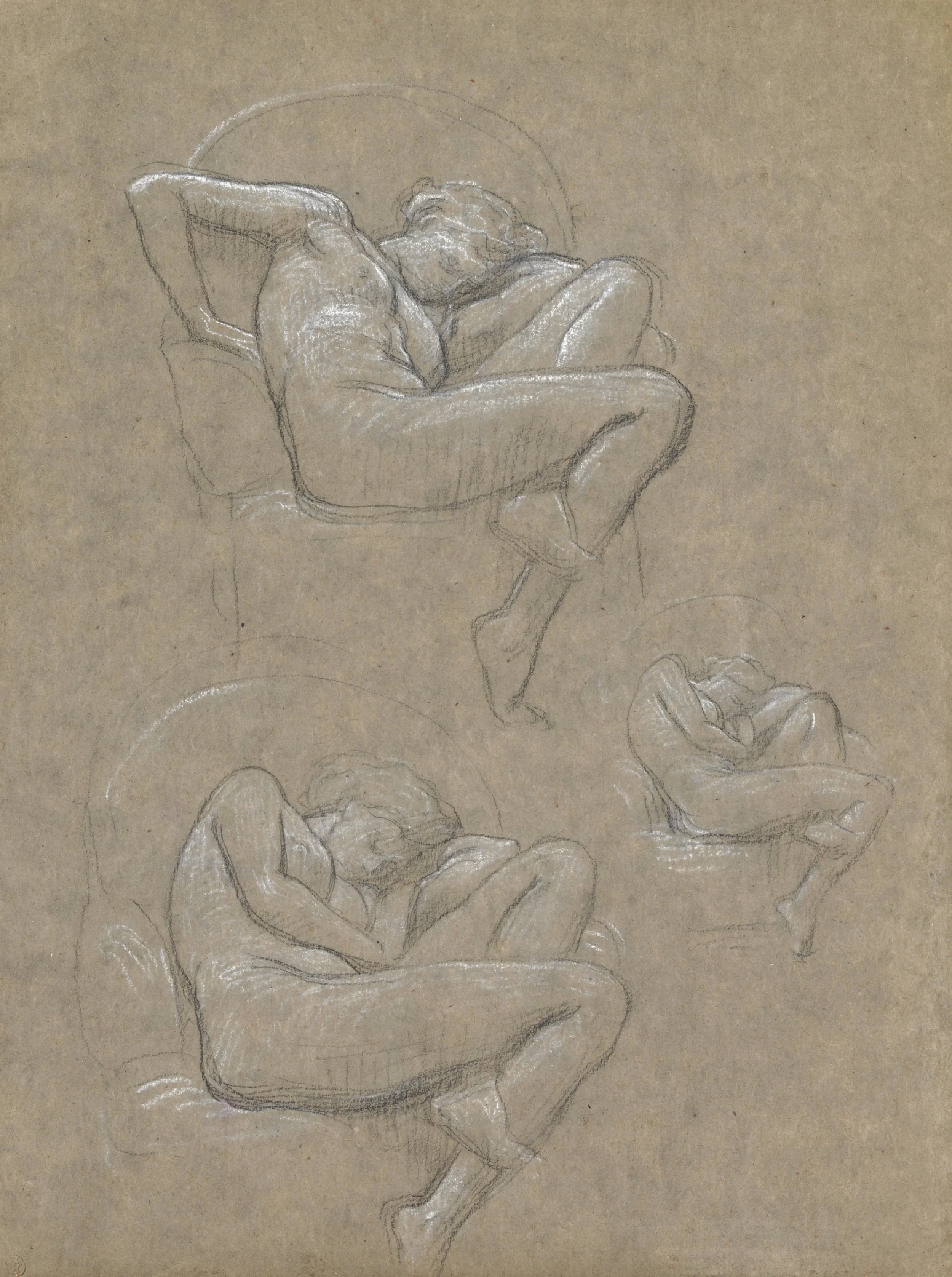
THE PIECE I'D NEVER PART WITH
On Tuesday 1 July join us for a panel discussion, , in partnership with Country Life magazine : The Piece I’d Never Part With. If you could only keep one single work of art from your collection, which would it be? If you could acquire a work of art at this moment, regardless of budget or availability, what would you choose? If you had a second chance to purchase a work of art, which was the one that got away?
Join Country Life contributor Patrick Monahan and a group of distinguished panellists to answer this and other pressing art collecting questions! Media partner Country Life magazine is supporting this entertaining evening. Tickets cost £25 p/p with proceeds from sales going towards The Society of Antiquaries of London's 'buy a square foot of Burlington House’ fundraising campaign.
-
EMANUEL VON BAEYER COLLABORATES WITH trias ART EXPERTS
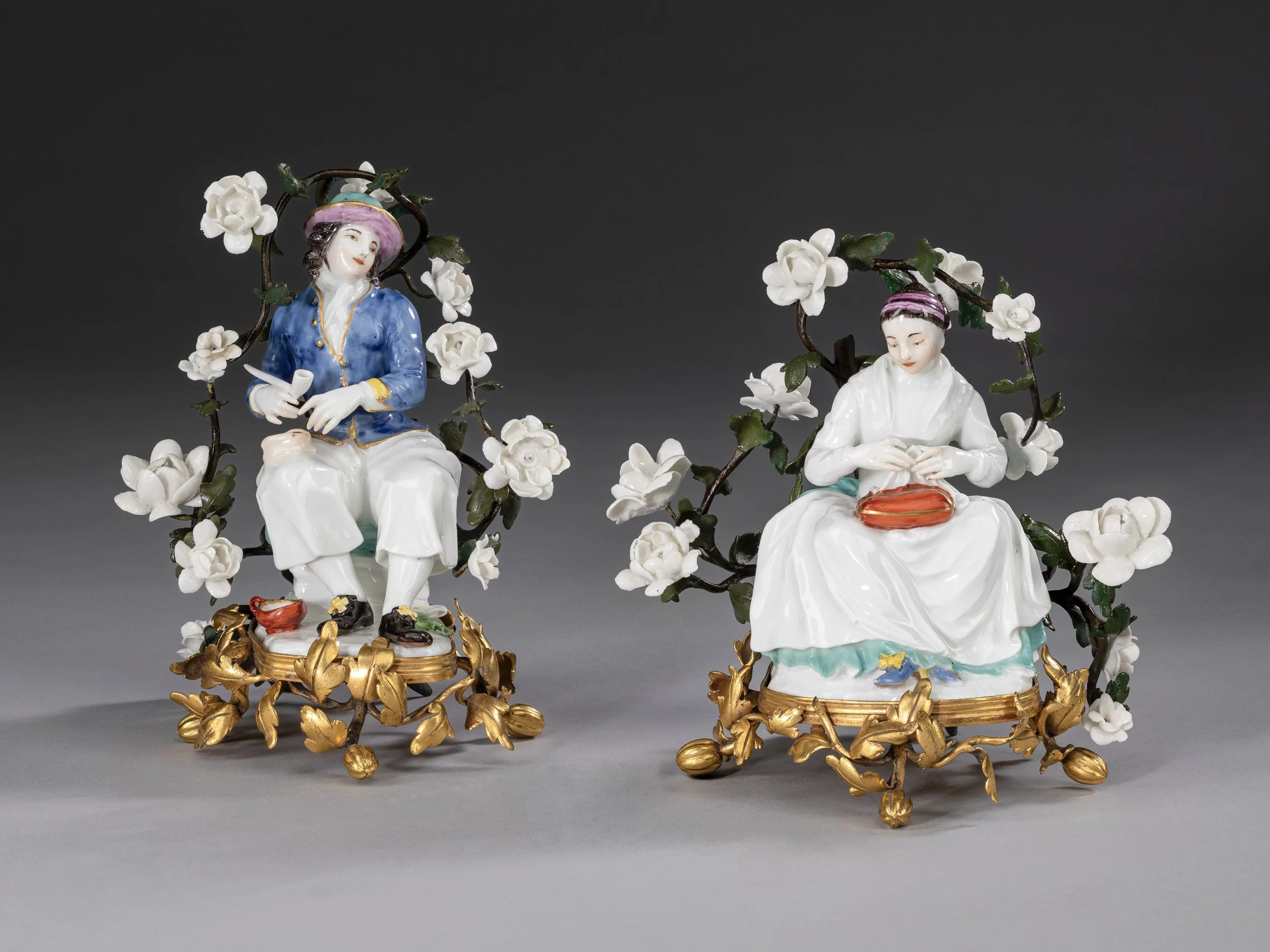
Emanuel von Baeyer gallery at 18 Cecil Court will have special displays during Classic Art London. On show will be a range of paintings, prints and drawings dating from the 18th century to the contemporary in perfect symbiosis. These will be joined by selected 18th century pieces of European porcelain from Meissen and Nymphenburg creating a conversation between one dimensional art and porcelain. The exhibition is a collaboration with Munich based trias Art Experts. Throughout the period the gallery will have extended opening hours and host several talks and events, including a discussion on a showcased work, The Turtle Race, an allegorical painting by an American Symbolist living in Italy at the time.
Opening hours: daily from Monday 23rd June - Friday 4th July, 12 - 6pm.
-
EXTRAORDINARY SCOTTISH SUBJECT BY WATERCOLOURIST PAUL SANDBY
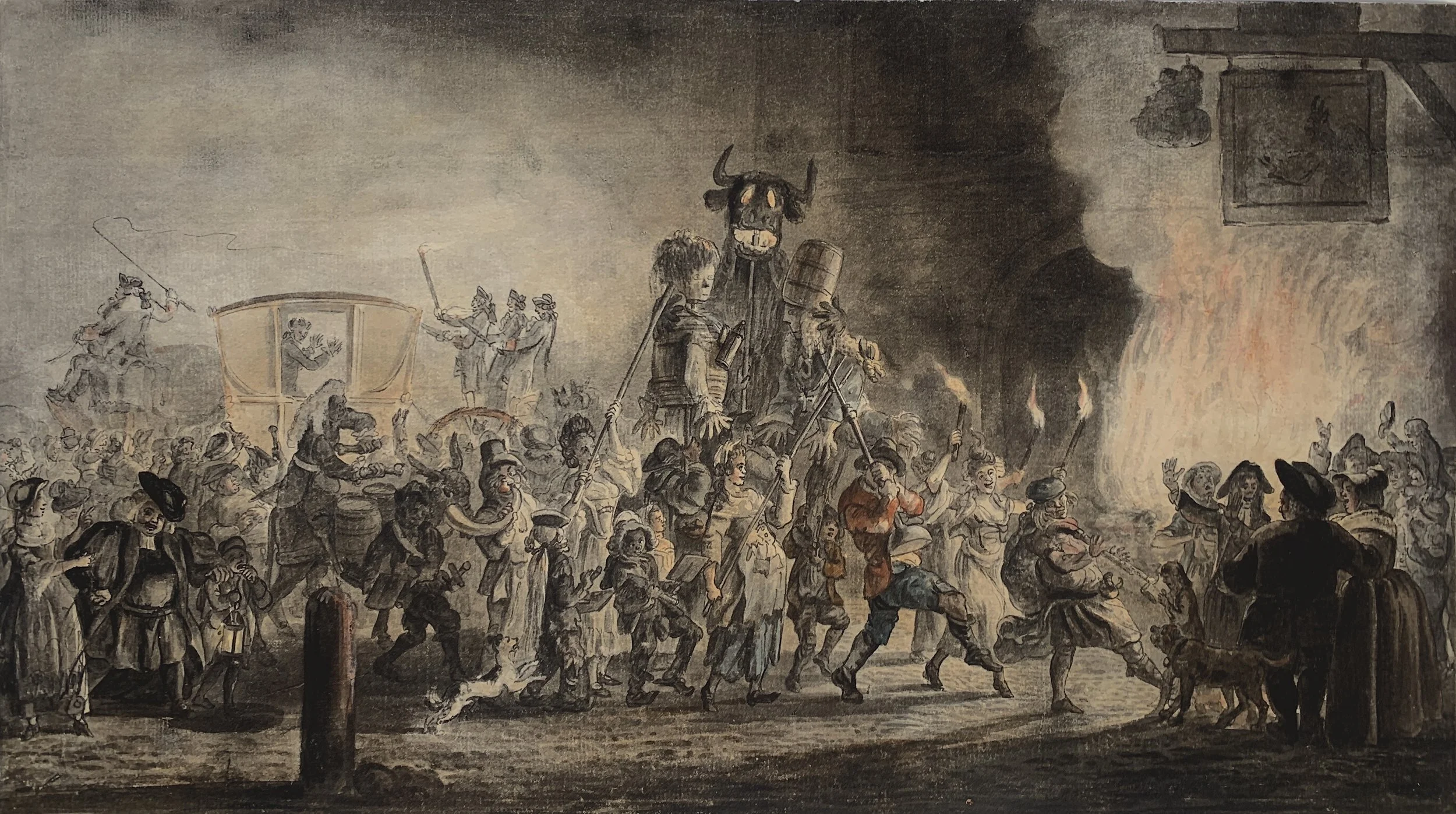
A work by Paul Sandby (1730-1809), “the father of English watercolour”, with a highly unusual subject has recently been discovered. Dating from Sandby’s early stay in Scotland when he was working on the military survey following the defeat of the Young Pretender’s rebellion in 1745, it is a great rarity in the artist’s work. The festivities depicted could be a traditional quarter-day celebration such as Beltane (a fire festival in spring), Imbolc, or Lughnasa, the latter featuring the sacrifice of a bull. It seems possible that the scene represented is Lughnasa, since a bull’s head is shown being carried.
The exact location of this scene has so far defied identification, but among the many notable features are the apparent horror of the nobleman in his carriage, his footmen ignoring the event, the inn sign with the image of the devil and the brilliantly captured variety of individuals in the procession. The work will be shown by James Mackinnon at his Classic Art London exhibition, to be held at 6 Duke Street, St. James’s from 26 June to 4 July.
-

THE RISE OF PRIVATE MUSEUMS IN LATIN AMERICA
On Monday 30 June, one of our institution-focused talks will take a deep dive into private museums in Latin America: how they balance a position between being an institutional entity and the forces of the art market. The talk, The Rise of Private Museums: The intersection of public and private in Latin America, is presented by Lassla Esquivel, a UK-based historian, researcher and curator currently focused on emerging art markets who is investigating private museums' models and their role within the art market. Organised in collaboration with The Society of the History of Collecting, the talk will finish with a Q&A session.
-

EXHIBITION NEWS: THE NEW ENGLISH LOOK
Rountree Tryon Galleries and Fine Art Commissions are delighted to present The New English Look for Classic Art London. This collaborative exhibition brings together a collection of art one might find in a quintessential English house: family portraits through the ages to sporting and landscape views and favourite pets. The exhibition includes a full length portrait of HM Queen Elizabeth II in robes of State (a similar version of the portrait is now in the Throne Room, Buckingham Palace), a charcoal drawing of HM King Charles III and a superb equine study of a racehorse and rider by Sir Alfred Munnings.
Images: Gareth Reid (b. 1974), Working drawing of HM King Charles III, 2019 with Fine Art Commissions and Sir Alfred James Munnings, P.R.A., R.W.S. (1878-1959), Davy Jones with the Hon. Anthony Mildmay up, oil on canvas with Rountree Tryon
-

OUR HOSPITALITY PARTNERS
Our hotel partner St. James’s Hotel & Club in Park Place, just off St. James’s Street, is offering a special two-night rate at 20% off with a complimentary glass of Champagne when you book quoting Classic Art London. This historic hotel started life in 1857 when English aristocrat Earl Granville and Marchese d’Azeglio, a Sardinian Minister, decided to found a new club as a London base for travelling diplomats, with past members being Winston Churchill, Henry James and Ian Fleming. This five-star hotel is for those in search of a luxurious, discreet bolthole. The hotel is also offering 20% off their Summer Afternoon Tea; mention CAL when booking or show printed map on arrival.
You can also enjoy a splendid Afternoon Tea at Fortnum & Mason, with a complimentary glass of Champagne, when you book via their Concierge Service. Call +44 (0)20 7465 8668 or email concierge@fortnumandmason.com and mention Classic Art London when booking.
Punctuate your peregrinations between Mayfair and St. James’s with a treat at one of the area’s leading restaurants. Whether it’s breakfast at Franco’s, London’s oldest Italian dining institution at the heart of the St. James’s community, lunch at Café Murano, Angela Hartnett’s renowned establishment, or supper at Wiltons, world-famous for the finest seafood and game, when you pre-book quoting Classic Art London or walk-in with one of our maps, savour a complimentary drink with your meal. Check our website for more details and plan your visit.
-

HEAD WEST TO BELGRAVIA & CHELSEA
Head West to Belgravia and Chelsea for more art, antiques and galleries! Our partner event Treasure House Fair takes place from 26 June-1 July in the grounds of the historic Royal Hospital Chelsea, close by Pimlico Road and Belgravia. It brings together a curated blend of art, antiques and design from 70 of the world’s foremost dealers offering their finest works. Treasure House Fair is on the Classic Art London map.
Nearby is Haynes Fine Art, specialists in European Impressionists, at 70 Pimlico Road, Belgravia, just a few minute’s-walk from Treasure House Fair. At Haynes Fine Art you will discover works by Renoir, Degas and a panoply of the leading lights of impressionism. This oil on canvas of late summer fruits, 'Pommes, Coing et Grenade sur un Linge' circa 1903-05, was exhibited in Paris in 1955, and will be included in the online catalogue raisonné of the work of Pierre-Auguste Renoir currently being prepared by the Wildenstein Plattner Institute.
Image: Pierre-Auguste Renoir (1841-1919), Pommes, Coing et Grenade sur un Linge, c.1903-05, oil on canvas, 8 5/8 x 12 7/8 ins
-

RARE WORK BY WILLIAM KENT DISCOVERED
William Kent (1685-1748) is today recognised as the “most versatile British designer of the 18th century” whose “artistic ingenuity and inventiveness” helped define Georgian taste. Alexander Clayton-Payne, showing at 6 Ryder Street, St. James’s from 28 June to 4 July, offers this rare discovery of an unrecorded watercolour made by Kent whilst he was studying, travelling and working in Italy (1709-1719). It joins a small group of about ten surviving drawings which date from this early developmental period; all but two are held in public collections. Alexander Clayton-Payne’s catalogue is available to view online.
Image: William Kent(1685-1748), A Study after Titian’s fresco ‘The Miracle of the Jealous Husband’ in St. Anthony’s Church, Padua, 29 August 1714, pen and ink & watercolour on paper, 44x29cm
-

FIVE WORKS BY THOMAS JONES OFFERED FOR THE FIRST TIME
Thomas Jones (1742-1803) is now regarded as one of the most significant, original and innovative of all eighteenth-century British artists. His postcard sized ‘Wall in Naples’, featuring a washing line, is one of the most popular works in the collection of the National Gallery, London.
Karen Taylor Fine Art, showing at 8 Duke Street, St. James’s from 25 June-4 July, presents an exceptional group of five works on paper by Jones, three oils on paper and two watercolours, which are offered for sale for the first time. They span his journey through Italy to Rome, his exploration of the Roman Campagna, and his stay in Naples, and encapsulate the inspiration he first yearned for and then found in Italy from 1776-1783.
Karen Taylor says: “Drawn to crumbling masonry and quiet corners, and with an eye for the unexpected, combined with an innate ability to capture light and shade, Jones’s timeless work delights the modern viewer with its immediacy. It is rare pleasure to offer, for the first time, five works by this sought after artist”.
Image: Thomas Jones (1742-1803), In the Campagna, near Rome, 1783 , signed T. JONES/1783, pen and ink and watercolour over pencil on Dutch writing paper, 24.7x34.7cm; 9 3⁄4 x 13 5/8 in
-

EVENT: ON THE FRONT LINE - WOMEN DRIVING THE ART WORLD
Panel Discussion: WAAW x The Society for the History of Collecting
10 June, 10:00-12:00, hosted by CAL participant ColnaghiThis talk will foreground the often overlooked work that women collectors, patrons and curators played in driving the art world both in London and in New York at the beginning of the 20th century.
The Speakers Dr Isobel Muir (formerly Royal Collection Trust and National Gallery) has recently written a research project on Jewish collectors and cultural philanthropists, 1824–1945. Dr Irene Walsh, art historian, has just published a book on Lillie P. Bliss, founding figure of MoMA, NY. Dr Marie Tavinor leads the Executive Master in Cultural Leadership at the Royal Academy of Arts and is Co-Chair of the Society for the History of Collecting. Introduction by Annya Sands, Founder of WAAW. Seats are very limited for this talk so please don’t delay in booking.
-
MUSEUMS & HERITAGE: OPERA CULTURE IN EARLY 18TH CENTURY LONDON - RODELINDA EXHIBITION AT HANDEL HENDRIX HOUSE
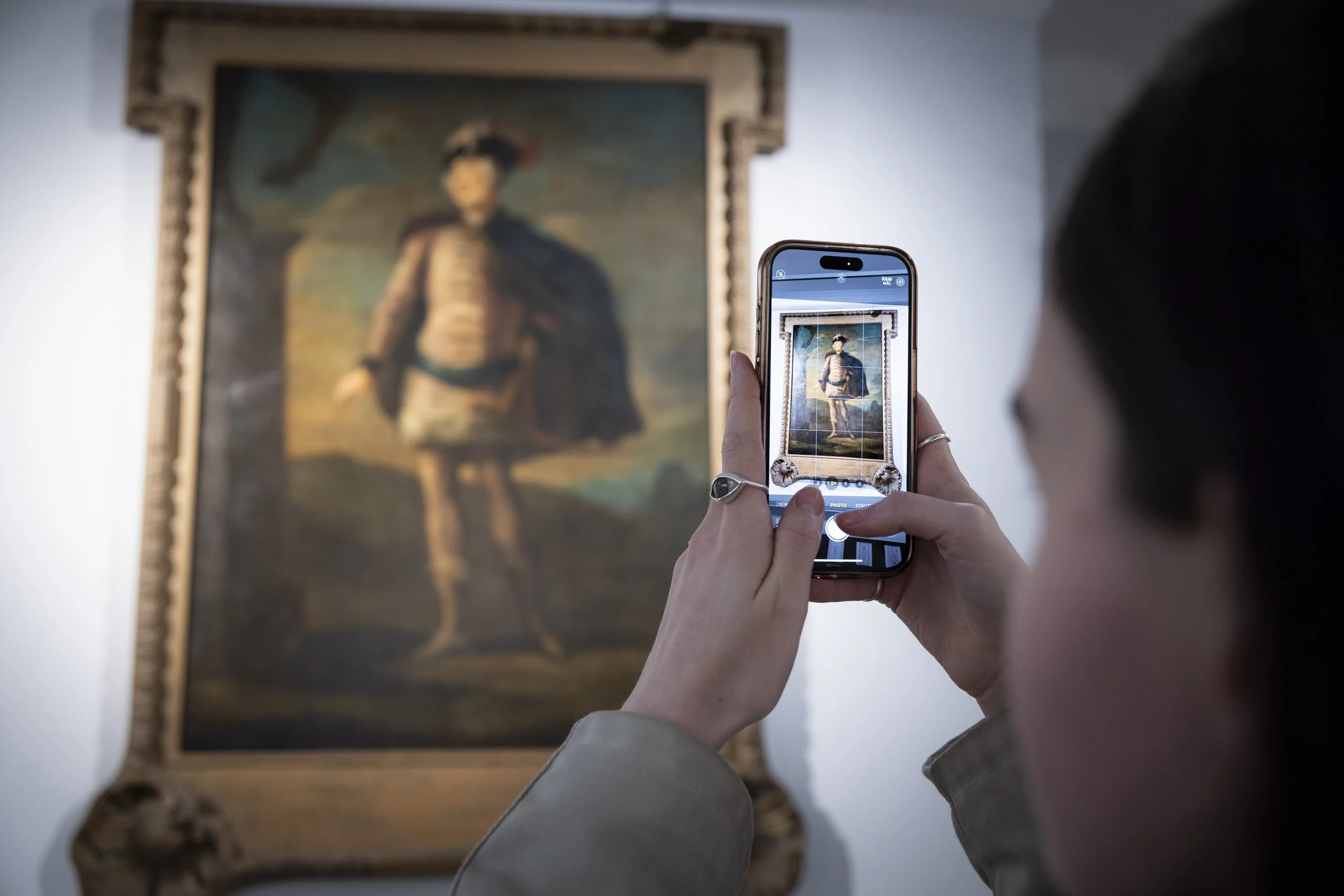
Widely considered to be among the finest of the more than 40 operas written by Handel, Rodelinda was composed at his home at 25 Brook Street in London and was first performed at the King’s Theatre in the Haymarket on 13 February 1725. To mark the tercentenary of this extraordinary opera, Handel Hendrix House is staging a special exhibition until 6 July. In addition to a portrait of Senesino, the celebrated castrato Francesco Bernardi, the exhibition includes an early libretto of the opera, portraits of other cast members and objects illustrating opera-going culture from the 18th century. The exhibition is included in the general admission ticket price. Visit the whole of Handel's House as well as Hendrix's apartment.
handelhendrix.org -

MUSEUMS & HERITAGE: REFRAMING CEZANNE AT THE GETTY
Leading authority on antique frames, Paul Mitchell Ltd, has worked with virtually every major museum in the world to reframe important works of art. Their studio in Avery Row, Mayfair is a trove of all styles and periods of frame imaginable. A recent example of their work involved an oil painting by Cezanne, Portrait of Antony Valabrègue (1869-71) for The Getty Museum. The portrait had been framed in a gilded baroque Roman style that detracted from the presence of the sitter. Discover how this painting was transformed and completed in a most magical way by its new frame. Paul Mitchell Ltd is hosting exclusive curator workshops at their studio during Classic Art London. See website for details.
Image: Paul Cézanne, Portrait of Antony Valabrègue, 1869-71. Courtesy of the J. Paul Getty Museum
-
BOOK LAUNCH: FRANCESCA ALEXANDER (1837-1917)
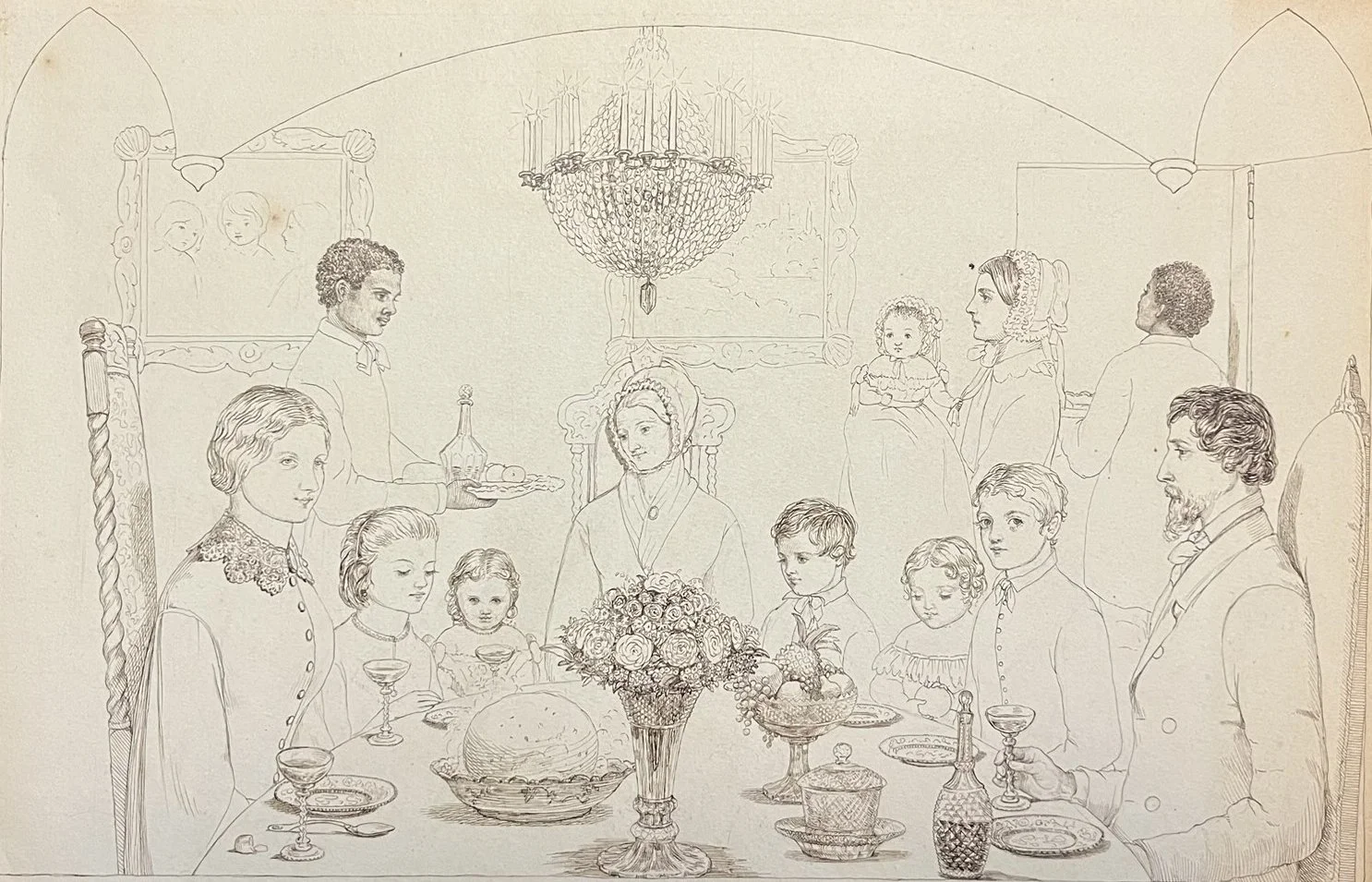
Ben Elwes Fine Art, in collaboration with Lund Humphries, hosted the UK launch of The Art and Life of Francesca Alexander (1837-1917) by Jacqueline Musacchio. This is the first book to examine the art and life of Francesca Alexander who moved with her parents from Boston to Florence in 1853. Largely self-taught, her portraits and nature studies and her translations of songs and stories were much admired by her contemporaries, including John Ruskin, who published three of her manuscripts and promoted her work to his following. In spite of this celebrity in her lifetime, Alexander and her work have largely been forgotten, until now.
Image: Francesa Alexander (1837-1917), Dining room scene, pen and graphite on paper, sheet 20.32 x 31.75 cm. Courtesy of Ben Elwes Fine Art, London
-

MUSEUM SALE
Karen Taylor Fine Art has recently catalogued a group of 93 travel watercolours by the artist and travel writer Constance F. Gordon-Cumming (1837-1924), rediscovered in a descendant’s attic in an English country house. Born and brought up in the Highlands of Scotland, Gordon-Cumming’s mother Eliza also painted and Landseer, among others, was a regular visitor to the family home. Constance developed a love of mountaineering, and went on to travel extensively in Asia, America and the South Pacific. A group of 14 works have been bought by the National Library of Scotland and a further group of 11 Sri Lankan subjects are now with the British Library. There are still fine examples available which will be on view during Classic Art London.
Image: Constance Gordon-Cumming (1837-1924), Adoration of the Tooth, Kandy (Ceylon) recently acquired by the British Library
-

TEFAF 2025
Colnaghi reported numerous sales at the Maastricht fair to European institutions and international collectors, notably of Southern European baroque pieces. Amongst these were a very rare still life of figs from the late 1640s by the female artist Giovanna Garzoni (Ascoli Piceno 1600-1670 Rome), whose great talent earned her the direct patronage of the Grand Duke Ferdinand II de' Medici, and a beautiful bust of Marcus Aurelius attributed to Giovanni Battista della Porta (Porlezza 1542-1597 Rome).
Image: Giovanna Garzoni (Ascoli Piceno 1600-1670 Rome), Bowl of figs with a hazelnut, c. 1650-1670, tempera on vellum, sold by Colnaghi at TEFAF 2025
-

MUSEUMS & HERITAGE : CHRIST CARRYING THE CROSS BY LUIS DE MORALES
A work by Spanish Renaissance master Luis de Morales, known as El Divino, has recently undergone extensive restoration by the J. Paul Getty Museum, reports The Art Newspaper. The painting, from around 1565, had been enlarged in the 18th century, work the Getty’s conservators had to painstakingly undo, and will go on view at the Los Angeles museum on 1 May. You can read the full article about the restoration in The Art Newspaper online. The painting was acquired in a private sale from Daniel Katz Gallery, which has traced the provenance of the work to the French Royal Collection, acquired by King Louis Philippe in 1836 in Madrid. It was later owned by Sir John Charles Robinson (1824-1913), first Keeper of the South Kensington Museum, and Surveyor of the Queen’s Pictures.
Image: Luis de Morales, Christ Carrying the Cross, c. 1565. J. Paul Getty Museum. Acquired from Daniel Katz Gallery. Image via The Art Newspaper